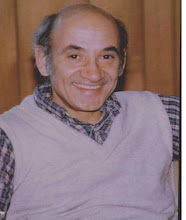
Sunday, March 27, 2011

Here are a sampling to my letters to the Editor of the Raleigh News and Observer


2003

There you go again, Mr. President (George W.Bush), you are the using the present soaring price of gasoline to resurrect your longstanding desire to risk potential environmental disaster by permitting drilling for oil on our continental shelf. The hundreds of billions of dollars necessary to build off-shore oil rigs would be better spent by creating incentives to promote further expansion of wind, solar, bio-fuel and other renewable energy sources.

Have you forgotten the 1989 Exxon Valdez oil spill in Prince William Sound, Alaska., one of the most devastating environmental disasters ever to occur at sea? Oil rigs as well as tankers are susseptable to accidental damage, with the potential of spilling millions of gallons of crude oil into our precious off-shore habitat areas.

In the five or more years it would potentioally take to get off-shore oil fields into production, more rapid movement toward hybrid, electric, and hydrogen fueled cars would be a far better way to eliminate our dependence on foreign oil.

2008

During the congressional recess, let’s hope real debate of Health Care Reform legislation takes place.

Questions I would like to see debated:

Would a “public option” reimburse doctors, hospitals, pharmacies and other providers at rates comparable to Medicare reimbursement or at rates comparable to private health insurance plans?

If the former is true, are providers willing to be reimbursed at markedly reduced rates for folks enrolled in a public option? If not, will they have the option to refuse to care for persons insured under the public option?

Those pursuing proposing a public option should be prepared to come up with a ballpark estimate of what it would cost for, say a family of four earning up to $50,000.

What will it cost the government to subsidize those at or below the poverty level

(Currently at $17,650 for a family of four)?

There are obviously many more questions and permutations. But answering the above questions wouldn’t be a bad start.

2011

There are those who have opposed Social Security from its inception, those who would privatize it and those who for ideological reasons would like to eliminate it entirely. I can understand their desire to lump SSI in with discretionary spending, Medicare and defense spending when they discuss the present deficit crisis.

The Congressional Budget Office estimates that the combined income from payroll taxes, taxes on benefits paid to recipients, and trust fund interest will generate sufficient income to pay Social Security Insurance benefits and Disability Insurance benefits to the year 2037. Social Security has not contributed to our present deficit. And although it will eventually require fixing, now is not the time, as the country struggles with massive unemployment and a painfully slow economic recovery.

Social Security Insurance legislation has been one of the most successful programs in our nation’s history. It must be removed from the present debate on how we as a nation address our present budgetary problems.

Thursday, December 9, 2010

I am dismayed by the inaccuracies and deliberate disinformation promulgated by both liberal and conservative television commentators and their so called expert guests. I believe, as well as most Americans, that extending the Bush high-end tax cuts (to those earning over $200,000 for individuals and $250,000 for couples) is a mistake. But it will not cost $900 billion over two years as I have heard Congressman and Senators repeatedly say. "The Center for American Progress" estimates the cost of extending the tax cut for wealthy Americans is $80 billion over two years. It's still a lot of money and would be better spent on job stimulating projects such as desperately needed infrastructure investments. But it's not as daunting as $900 billion. Obama's compromise, although a bitter pill, recognizes that the Republican Senate will vote as a block to preserve tax cuts for the rich. And that stretching out the argument throughout the rest of the lame-duck session will eliminate or at least endanger extending unemployment insurance, accomplishing repeal of "Don't Ask Don't Tell," approving the "Start Treaty" and passing the "Dream Act." Democrats should cease calling for a pyrrhic victory and approve the compromise and move on to the address other issues important to all Americans...jobs, human rights and our national security.

Tuesday, September 22, 2009

Adding more troops to Afghanastan

I believe that unmanned drone aircraft that kill from afar, and more often than not include more innocent civilians than enemy, and thinly spread American and NATO forces seem as foreign occupiers allied with a corrupt Afghan government, do little to eradicate the Taliban or Al Quaeda who control thousands of villages throughout Afghanistan.
A troop buildup will kill more people, including Americans, enemies and innocents. Escalating our military operation will not win the hearts and minds of the Afghan people. It will have the opposite effect.
Greg Mortenson has successfully demonstrated a way to succeed in Afghanastan. He has traveled among the people of Afghanastan and has built hundreds of schools and made many friends for America. What we need are thousands of Greg Mortensons, each accompanied by a couple of Afghan bodyguards who speak the indigenous language. They can create jobs by building schools and critical infrastructure with dollars that now are wasted on propping up an ineffectual and probably illegitimate Afghan government, and billions squandered on military expenditures.

Monday, August 17, 2009

Democrats cave on public option

Since it appears that Senate Republicans are determined to scuttle any health care bill containing a public option, it seems prudent for Obama to shrug and say it's only a small part of the overall health reform package. He's agreed to consider instead, a Republican proposal for Health Insurance Cooperatives that would give individuals greater barginuing power and thereby potentially better rates. But that wouldn't represent a chalenge to existing insurance rates, it would only guarantee that the cooperatives would be able to offer the same inflated rates in existance today.
In a deficit neutral bill, the discount if any offered by cooperatives would have to come from savings in medicare and medicaid and or increased taxes on persons earning greater than $250,000 anually, or the limit on charatable deductions allowable persons in the highest income brackets.
But I don't see how this is going to work if there is no mandate for everyone to carry health insurance. Not when the Health Care Reform bill would guarantee coverage regardless of a preexisting condition or the onset of an illness. Good luck trying to get young healthy adults to buy health insurance when they can wait until they get sick and not worry about being rejected for their pre-existing condition.
Using the auto insurance model, what if it is mandated that every American must carry health insurance, and at a minimum must be protected from catastrophic expenses, over some predetermined amount. Such coverage could be offered by private insurers or some already existing government plan such as medicare in order to avoid creation of another layer of burochracy.


Monday, August 3, 2009

Friends, congressmen and senators, lend me thine ears...

August 3, 2009
During the congressional recess, let’s hope constructive and informative debate of health care reform legislation takes place.

Questions I would like to see debated:

Would a “public option” reimburse doctors, hospitals, pharmacies and other providers at rates comparable to current Medicare reimbursement or at rates comparable to private health insurance plans?

If the former is true, would providers be willing and able to be reimbursed at markedly reduced rates for folks enrolled in a public option? If not, will they have the option to refuse to care for persons insured under public option insurance?

Those pursuing proposing a public option should be prepared to come up with a ballpark estimate of what it would cost for, say a family of four earning up to $50,000 per year.

What will it cost the government to subsidize those at or below the poverty level
(Currently at $17,650 for a family of four)?

There are obviously many more questions our legislators must grapple with. But answering the above questions wouldn’t be a bad start.

Thursday, July 23, 2009

Health Care Reform...USA

What is the average administrative cost of the major health insurance carriers?

What is the average profit margin of the major health insurance carriers?

What is the average administrative cost of government run programs such as social security and Medicare?

How much less than the average major health plans would the public option cost?

If we add up the savings from lower administrative costs, and the elimination of industry profits how much would that cover of the difference in private versus the public option premiums?

Knowing those numbers would help the public decide how much the public option will cost.


How much will it cost to computerize medical records nationwide? That may be a staggering figure. It will increase efficiency in the long-run but I suspect will take years to realize. How about hitting up Microsoft and other industry giants to pay for it? After all they will benefit from a national computerized medical record system.

If our legislators are grappling with the above questions, why are they keeping us in the dark?

Peter Rizzolo MD